
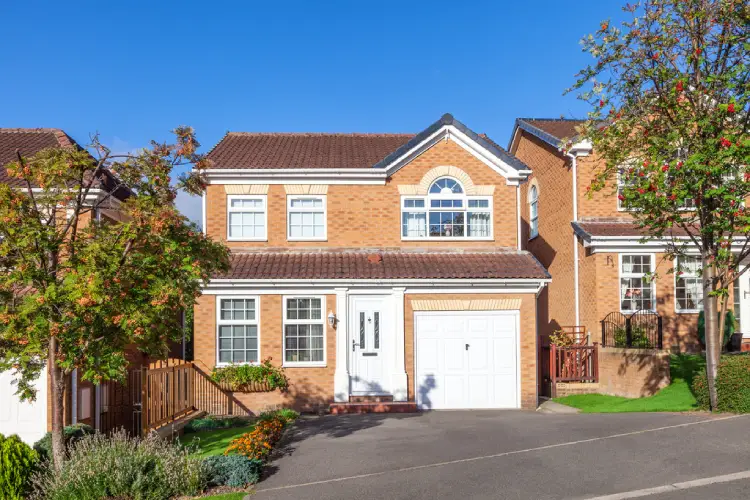
Most sellers treat an EPC as an afterthought — something to sort because the solicitor asked for it, not something that actually affects what they’re paid. That assumption is costing some people real money.

The relationship between your EPC house price position and what a buyer is prepared to offer has become measurably stronger over the last few years, and if you’re preparing to sell, understanding it is worth more than most of the other pre-sale advice you’ll receive.
This isn’t theoretical. Research cross-referencing Land Registry data with the national EPC register consistently shows that higher-rated homes sell for more and sell faster. Some studies put the EPC house price gap between an A or B rated property and a D rated equivalent at between 5% and 14%, depending on property type and location. On a £180,000 semi-detached in Stockton or Darlington, that’s potentially £9,000 to £25,000 of value sitting in a letter rating that most sellers have never seriously thought about.
What the Data Actually Says About EPC and House Price
The most compelling evidence on the EPC house price relationship comes from analysis published by the Department for Energy Security and Net Zero, which found consistent premiums attached to higher-rated residential properties across England and Wales. The premium is most pronounced at the top of the scale — A and B rated homes — but the difference between a C and a D is also financially meaningful, particularly now that energy costs are front of mind for buyers at every budget level.
What’s shifted buyer behaviour most significantly is the combination of higher energy bills and the growing availability of green mortgage products. Buyers today are doing mental arithmetic on running costs that they simply weren’t doing five years ago. A purchaser looking at two similar properties — one rated C, one rated E — is calculating the difference in annual bills and reflecting that in what they’re willing to offer. The EPC house price conversation is now happening in viewing appointments whether sellers are aware of it or not.
How Green Mortgages Are Widening the EPC House Price Gap

The mortgage market has made the EPC house price dynamic more formalised than it used to be. Green mortgage products — which offer preferential interest rates for buyers purchasing A or B rated homes — are now available from a growing number of mainstream lenders. This matters to sellers because a buyer who qualifies for a lower rate has increased purchasing power, which flows directly into what they can offer.
A low rating doesn’t just affect perceived value — it can actively narrow your buyer pool. Some lenders are beginning to factor energy efficiency into affordability assessments, and as this practice becomes more widespread the EPC house price premium attached to well-rated properties will only grow. Sellers who understand this early are in a stronger position than those who find out during negotiations.
The Improvements Most Likely to Strengthen Your EPC House Price Position
Not all EPC improvements deliver equal return. Based on assessments carried out across Teesside and the wider North East every week, these are the measures most likely to move your rating — and therefore your EPC house price outcome — without requiring major capital outlay:
- Loft insulation. If your loft is uninsulated or has less than 100mm of mineral wool, topping it up is one of the highest-impact, lowest-cost improvements available. It can shift several SAP points and in the right circumstances move a property from a D to a C on its own.
- Heating controls. Adding a room thermostat, a programmer, and thermostatic radiator valves to an older system is relatively cheap and has a disproportionate effect on the rating. A large number of properties I assess across Middlesbrough and Stockton have decent boilers let down by outdated or absent controls. Fixing this costs a few hundred pounds and strengthens your EPC house price position meaningfully.
- Cavity wall insulation. Where construction type allows, cavity fill is cost-effective and can make a significant difference to both the SAP score and the actual thermal performance of the property.
- Boiler replacement. Replacing a pre-2005 or G-rated boiler with a modern condensing unit can move a rating by a full band in some cases. It’s a larger investment, but the EPC house price return — particularly on higher-value properties — can justify it. Worth modelling against your expected sale price before committing.
- LED lighting throughout. A small contribution to the SAP score, but costs almost nothing to do before an assessment and is worth ticking off regardless.
What a Poor EPC Actually Costs You When Selling
A weak EPC house price position gives buyers a concrete negotiating tool. An E, F, or G rated property will attract offers that factor in the cost of improvement — and buyers will get quotes for insulation, boilers, and glazing before making them. They’ll knock the cost off, usually with a margin added for inconvenience, and they’ll reference the EPC rating explicitly to justify it.
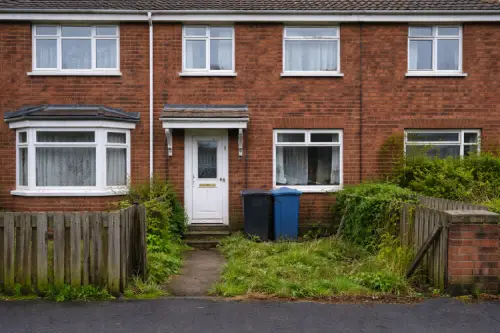
A practical example: we recently assessed a three-bed semi in the Hartlepool area that came back as an E. The recommendations report showed around £3,200 in loft insulation, heating controls, and minor draught-proofing work would move it comfortably to a D — and potentially a C with a boiler upgrade. The owner hadn’t considered any of this before marketing. Within a fortnight of listing, buyers were using the E rating as leverage in negotiations. Getting ahead of this with a targeted assessment and focused improvements would have paid for itself several times over in the final agreed price.
This is the core point about the EPC house price relationship: the certificate doesn’t just reflect your property — it actively shapes how buyers value it. Treating it as a tool rather than a formality changes what you walk away with.
Timing Your EPC for the Best Possible House Price
The sellers who benefit most from the EPC house price premium are the ones who get their assessment done before they brief an estate agent — not after. Getting in early gives you time to review the recommendations report, carry out the improvements that move the needle, and commission a fresh assessment showing the improved rating before a single viewing takes place.
An assessment takes less than an hour for a standard property and the certificate is lodged the same day. There is no practical reason to leave this until the last minute, and the cost — typically £55 to £85 for a standard domestic property in this area — is negligible against the potential EPC house price return. See our guide on EPC costs if you want a full breakdown of what to expect to pay.
Getting Your EPC Right Across the North East
Whether you’re selling in Middlesbrough, Redcar, Darlington, or a village outside Durham, the EPC house price dynamic is the same. What differs is the housing stock — and that’s where local knowledge matters. A lot of the pre-1980s terrace and semi-detached stock across Teesside has genuine scope for improvement that generic national guidance doesn’t always reflect. An assessor who knows the common construction types in this area will produce a more accurate certificate and more practically useful recommendations than one applying default assumptions.
EPCIQ covers the whole of the Tees Valley and surrounding areas. If you’re preparing to sell and want to understand your EPC house price position before you go to market, we can arrange an assessment quickly and get the certificate lodged the same day. See our local pages for EPC in Middlesbrough, EPC in Stockton-on-Tees, EPC in Hartlepool, and EPC in Ingleby Barwick.
Frequently Asked Questions
By how much can an EPC rating realistically increase my sale price?
Research suggests the EPC house price premium for an A or B rated property over a D rated equivalent ranges from roughly 5% to 14%, depending on property type, location, and current market conditions. For a C versus a D the gap is smaller but still financially significant — particularly as buyer awareness of energy costs continues to grow. The actual impact on your specific property depends on what improvements are feasible and how your local market is responding to energy efficiency.
Does improving my EPC rating always increase my asking price?
Not automatically — but it removes a specific and increasingly common reason for buyers to negotiate downward. A poor rating gives buyers a concrete number to argue with. Improving it takes that lever away and, in many cases, positions the property favourably against comparable homes on the market. The EPC house price benefit is as much about protecting your asking price as it is about increasing it.
How do I know which improvements are worth doing before selling?
The recommendations report attached to your EPC lists the specific improvements relevant to your property, with estimated costs and the potential impact on the rating. This is the most useful starting point. Cross-reference the cost of each measure against the likely effect on your EPC house price position and prioritise accordingly. A local assessor can talk you through it — it’s part of what you’re paying for. Our FAQ page also covers common questions about the assessment process.
Can buyers check my EPC rating before they even view the property?
Yes — and many do. Every lodged EPC is publicly accessible on the government’s register. Buyers searching in your area can look up your property’s rating before they book a viewing, which means your EPC is already influencing your buyer pool before you know it. This is another reason to treat it as a strategic pre-sale tool rather than a legal formality.
Ready to Understand Your EPC House Price Position?
An accurate, up-to-date EPC is one of the most cost-effective things you can do before selling. It tells you exactly where your property stands, what improvements would make the biggest difference, and — if the rating is already strong — gives you a marketing asset that buyers are genuinely paying attention to.
EPCIQ provides fast, accurate EPC assessments across Middlesbrough, Teesside, and the wider North East. Certificates are lodged the same day, pricing is transparent from the start, and we’re straightforward to get hold of if you have questions. Read what our clients have to say on our testimonials page, or find out more about us.
Get in touch today — we can usually arrange an assessment within 48 hours.
Ready to Book Your EPC?
EPCIQ covers Middlesbrough, Stockton, Hartlepool, Darlington, Redcar, Durham and the whole of the North East. Get in touch today and we will confirm your appointment within 24 hours.