
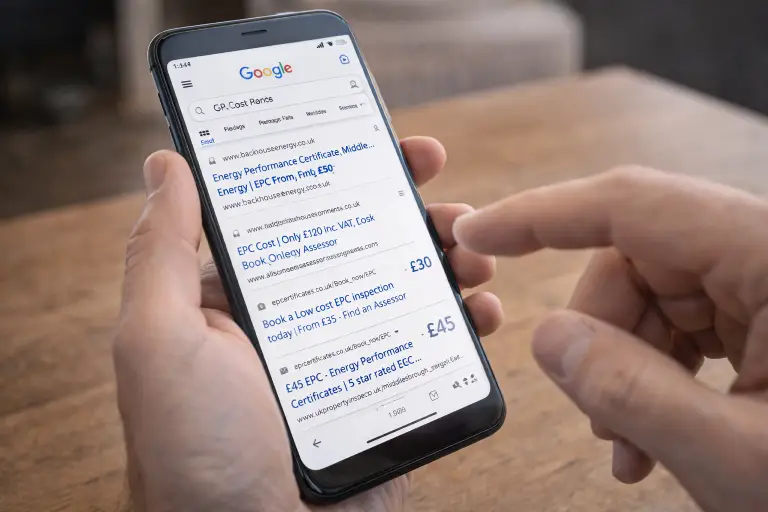
If you’ve typed something like “energy performance certificate cost” into Google recently, you’ve probably been met with wildly different figures — anything from £35 to £120, with very little explanation of why. It’s confusing, and honestly, that confusion is exactly what some cheap providers rely on. As a Domestic Energy Assessor based in Middlesbrough, I want to give you a straight answer: what you should actually expect to pay, what affects the price, and — just as importantly — what to watch out for when you’re looking for an assessor.
This isn’t a generic guide lifted from a national website. These are real prices for real properties in and around Teesside — the kind of terrace houses you get in central Middlesbrough, the new-builds over in Ingleby Barwick, the older semis in Stockton and Billingham. Let’s get into it.
What Does an EPC Cost in Middlesbrough Right Now?
For a standard residential property in the Middlesbrough area, you’re typically looking at somewhere between £50 and £90 for an EPC. The national average quoted on many comparison sites is around £60–£70, and that broadly holds true here in the North East — though it’s not the full picture.
Here’s a rough breakdown of what you’d generally expect to pay locally based on property type:
- 1–2 bed flat or apartment: £50–£65
- 2–3 bed terraced or semi-detached: £55–£75
- 3–4 bed detached house: £65–£85
- Larger or more complex properties: £80–£100+
These figures assume a straightforward domestic property with reasonable access. If your property is particularly large, has unusual construction methods, or requires a return visit because access wasn’t possible on the first attempt, the cost may be a little higher. Most reputable assessors will be upfront about this from the start.
One thing worth knowing: the energy performance certificate cost you pay covers more than just the assessor turning up with a clipboard. It includes the formal lodgement of your certificate onto the national EPC register, which gives your certificate its legal standing. That database submission is part of what you’re paying for — it’s not optional, and any assessor not doing it isn’t doing their job properly.
Why Does the Energy Performance Certificate Cost Vary So Much?
This is the question I get asked a lot, and the honest answer is: it varies because not all EPCs are equal — even though on paper they’re all the same document.
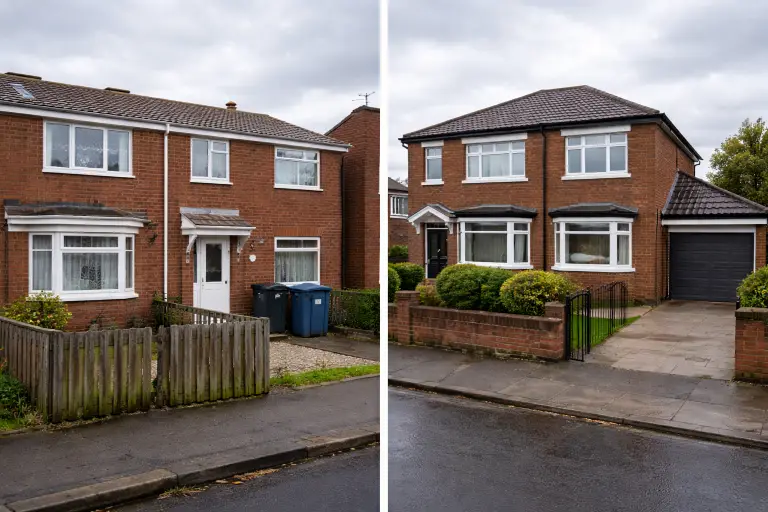
Several real factors affect what an assessor charges:
1. Property Size and Complexity
A one-bed flat in a converted Victorian terrace off Linthorpe Road takes considerably less time to assess than a four-bed detached out towards Eaglescliffe. More rooms, more heating zones, more construction types to identify — it all adds time, and time has a cost. An assessor quoting you the same flat rate for both properties is either cutting corners on one of them or hasn’t thought through their pricing.
2. Travel and Location
Based in Middlesbrough, we cover a wide area — including Stockton-on-Tees, Hartlepool, Darlington, Redcar, Guisborough, and across into County Durham. Properties closer to base are quicker and cheaper to reach. If we are heading out to a more rural address or somewhere a bit further afield, that travel time is a legitimate factor in pricing. Assessors in other parts of the country face the same calculation.
3. Whether the Certificate Is Needed Urgently
Most standard bookings are completed within a few days with the certificate lodged the same day or next working day. If you need it done today because a solicitor is pressing you or a sale is about to fall through, some assessors charge a premium for that turnaround. Totally understandable — just ask upfront.
4. Commercial vs. Residential
Domestic EPCs and commercial EPCs are completely different beasts. Commercial EPCs involve different software, different qualifications, and considerably more complexity. If someone is quoting you £40 for a commercial EPC (or a domestic EPC for that matter!), something isn’t right. Domestic pricing is the focus of this article, but it’s worth knowing they’re separate.
The Problem With Rock-Bottom EPC Prices
Let us be direct here: if you see an advert offering EPCs for £35 or £40, please pause before you book. We are not saying every cheap provider is dodgy, but the economics don’t really add up, and here’s why that matters to you.
An assessor has to pay for their accreditation body membership, their Professional Indemnity Insurance, lodgement software licences, and the time it takes to travel to your property, carry out the inspection, process the data, and lodge the certificate. When you start cutting the price too aggressively, something has to give.
In practice, what often gives is the quality of the inspection itself. A rushed assessment means things get missed — insulation types, heating controls, glazing specifications. That matters because:
- An inaccurate EPC can affect your property’s sale or let — particularly now that buyers and tenants are paying more attention to ratings.
- If you’re hoping to use your EPC to access improvement grants (like the Great British Insulation Scheme), an inaccurate certificate can block you from receiving help you’re entitled to.
- Landlords who are trying to improve their rating ahead of upcoming regulatory changes need accurate advice, not a rubber stamp.
- If the assessment gets audited (they often do) and a cheap “rush job” has been done, it will almost certainly be incorrect and the EPC becomes invalid. Assessors are required to re-register a new EPC, and not only can this change the EPC score significantly, some assessors simply don’t do it and move onto pastures new. This effectively means you then have to pay someone to come and do another one.
The EPC cost you pay is a relatively small part of a property transaction. Getting it right is worth the extra few pounds.
What Should You Get for Your Money?
When you book an EPC with a proper, qualified Domestic Energy Assessor, here’s what you should actually receive:
- A visit from an accredited assessor (check they’re on the DLUHC register)
- A thorough inspection of your property — loft access included where safe and accessible
- A certificate lodged to the national register, valid for 10 years
- A clear rating from A to G, plus a recommended rating showing what’s achievable
- A recommendations report detailing practical improvement measures
- Confirmation of the certificate reference number so you or your solicitor can look it up
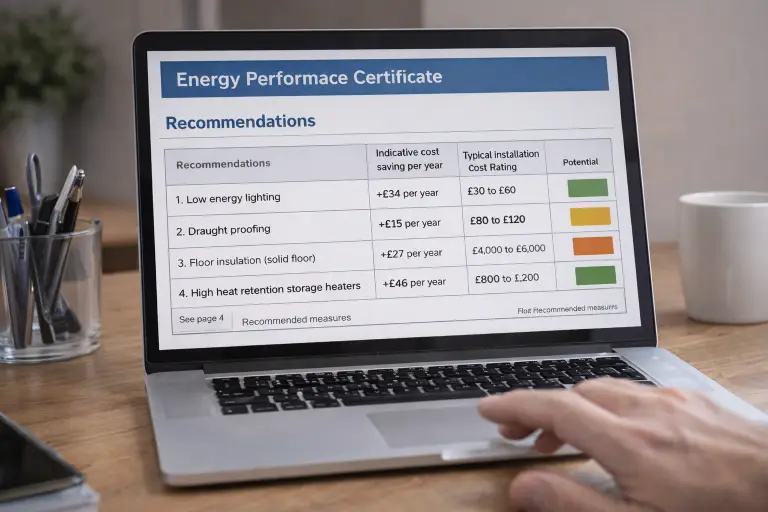
That recommendations report is something a lot of people overlook, but it’s genuinely useful. It breaks down the improvements — cavity wall insulation, loft insulation, heating controls, solar panels — and shows the estimated cost and saving for each. If you’re a landlord trying to work out how to get from an E to a C, or a homeowner who wants to reduce their energy bills, that section of the EPC is worth paying attention to.
How to Choose a Trustworthy Local EPC Assessor
Here’s my honest advice on finding someone reliable, regardless of whether you use us or not:
- Check their accreditation. Every legitimate Domestic Energy Assessor must be accredited with a recognised scheme — such as Elmhurst Energy, ECMK, or Quidos. You can verify anyone on the national register. If they can’t tell you their accreditation number, walk away.
- Read their reviews. Google reviews, Trustpilot, even Facebook recommendations — they all tell you something real. Look for comments that mention specific properties or experiences, not just five-star one-liners.
- Ask what’s included. Will they access the loft? Do they lodge the certificate themselves? Will you get the reference number the same day? These are simple questions that a good assessor will answer without hesitation.
- Be cautious of very long lead times. Some online booking platforms take your payment and then subcontract to the cheapest available assessor in the area. There’s nothing wrong with that in principle, but it does mean you have less control over who actually turns up.
- Local knowledge matters. An assessor who works in Middlesbrough day in, day out will know that a lot of the housing stock around Brambles Farm or Grove Hill is of a particular non-standard construction type, or that many properties in certain areas have been partially improved with different insulation over the years. That knowledge leads to a more accurate assessment.
Areas We Cover Across Teesside and the North East
EPCIQ is based in Middlesbrough and carries out EPCs across the whole of the Tees Valley and surrounding areas. We typically cover everything within roughly 40 miles of Middlesbrough town centre, which means if you’re searching for an EPC in any of the following areas, we can help:
- EPC in Middlesbrough — including Linthorpe, Acklam, Marton, Nunthorpe, and central areas
- EPC in Stockton-on-Tees — including Billingham, Thornaby, Norton, and Eaglescliffe
- EPC in Hartlepool — covering the town and surrounding villages
- EPC in Ingleby Barwick
- EPC in Darlington — covering the town and surrounding villages (dedicated page coming soon)
- EPC in Redcar and Cleveland (dedicated page coming soon)
- EPC in Durham and Chester-le-Street (dedicated page coming soon)
- EPC in Guisborough, Yarm, Thornaby, and Billingham
If you’re not sure whether we cover your area, just give us a call or drop us a message. Chances are we do, or we can recommend someone who does.
Frequently Asked Questions About EPC Costs
How long does an EPC take?
The on-site inspection for a standard two or three-bed house typically takes around 30–45 minutes. Larger or more complex properties may take up to an hour. The certificate itself is usually lodged and issued to you the same day, or the following morning at the latest.
How long does an EPC last?
An EPC is valid for 10 years from the date of issue. You’ll need a new one if the existing certificate has expired, or if you’ve made significant changes to the property such as adding an extension, installing a new heating system, or improving the insulation. All these could affect the rating.
Do I need an EPC to sell my house?
Yes. In England and Wales, you must have a valid EPC in place before your property is marketed for sale or let. Your estate agent should ask for it. If they’re not, that’s actually a problem on their end, not yours. See our FAQ page for more on the legal requirements.
Can I get a free EPC?
In most cases, no, not for a standard domestic EPC. However, some energy efficiency schemes will fund an EPC as part of a broader improvement programme. If you’re on certain benefits or have a low-rated property, it’s worth checking whether you qualify for support. Your energy supplier or local council may have information on current schemes.
What is the minimum EPC rating for landlords in 2025?
As of 2025, landlords in England must have a minimum EPC rating of E to legally let a property, unless an exemption applies. The government has been consulting on raising this to C, which would have significant implications for landlords across Teesside, particularly those with older housing stock. If you’re a landlord unsure about your position, getting an up-to-date EPC is the right first step.
Ready to Book Your EPC in Middlesbrough or Teesside?
Getting an accurate, fairly priced energy performance certificate shouldn’t be stressful. Whether you’re selling, letting, or just want to understand your home’s energy performance better, EPCIQ offers a straightforward service with no hidden fees and certificates lodged the same day.
We cover Middlesbrough, Stockton, Hartlepool, Darlington, Redcar, Durham, and everywhere in between. The energy performance certificate cost is clear from the start. No surprises when we arrive, no chasing us for your certificate number afterwards.
Check out our customer testimonials to see what our clients across the region have to say, or head to our about page to find out more about who we are and how we work.
Ready to get booked in? Get in touch today and we’ll confirm your appointment quickly, usually within 24 hours.
Ready to Book Your EPC?
EPCIQ covers Middlesbrough, Stockton, Hartlepool, Darlington, Redcar, Durham and the whole of the North East. Get in touch today and we will confirm your appointment within 24 hours.