
Most people first encounter an EPC certificate when they’re buying, selling, or renting a property — and at that point, it tends to feel like just another piece of paperwork to sort out. A legal requirement, yes, but not something worth thinking about too hard. That’s a mistake, and one that costs some homeowners and landlords more than they realise. An EPC certificate — short for Energy Performance Certificate — tells you far more about a property than its letter rating suggests, and understanding what it actually measures can genuinely change the decisions you make.
This guide covers what an EPC actually is, how the assessment works in practice, what the ratings mean in real terms, and why it matters whether your property sits at a C or an E. It’s written from the perspective of someone who carries out these assessments every week — not from a government leaflet.
What Is an EPC Certificate, Exactly?
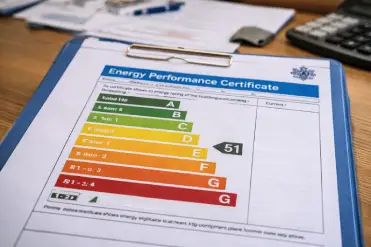
An EPC certificate is an official document that rates the energy efficiency of a residential or commercial property on a scale from A (most efficient) to G (least efficient). It also includes a recommended rating — the score the property could achieve if certain improvements were made — alongside a detailed breakdown of those improvements and the estimated cost and saving of each one.
Every EPC is produced by an accredited Domestic Energy Assessor (DEA) and must be lodged on the national EPC register, maintained by the government. Once lodged, it’s publicly accessible — anyone can look up the EPC for any property in England, Wales, or Northern Ireland using the property’s address or postcode. That’s worth knowing if you want to check a property before you view it.
The certificate is valid for 10 years from the date of issue, unless significant changes are made to the property in the meantime. A new boiler, an extension, or major insulation work can all affect a rating enough to warrant a fresh assessment.
What Actually Happens During an EPC Assessment?
This is where a lot of the confusion lies. People expect something more dramatic — pressure tests, thermal imaging cameras, readings from meters. The reality is more methodical, and understanding what an assessor is actually looking for helps explain why the quality of the inspection matters so much.
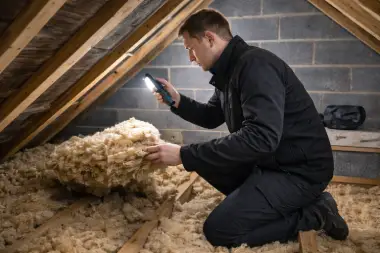
When I arrive at a property, I’m working through a detailed checklist of data points that feed into the Standard Assessment Procedure — the SAP calculation that sits behind every EPC rating. That data includes:
- The property’s construction type and age. A solid-walled Victorian terrace and a cavity-walled 1970s semi will have very different baseline assumptions built in, and identifying which you’re dealing with is not always obvious.
- Wall, floor, and roof insulation. Where accessible — including loft hatches — I’ll check what’s actually there, not just assume a standard value. This is one of the areas where a rushed assessment will fall down: if an assessor doesn’t go up into the loft, they’re likely applying a default that may understate or overstate what’s there.
- Glazing type and age. Single, double, or triple glazed, the approximate year of installation, and the frame material all contribute to the calculation.
- The heating system. Boiler type, fuel, approximate age, whether there are heating controls (thermostats, TRVs, programmers), and how the hot water is heated. This section of the assessment has a significant influence on the final rating — an older gas boiler with no controls will drag a score down considerably compared to a modern condensing boiler with full zoning.
- Lighting. What proportion of fixed lighting in the property is low-energy (LED or CFL).
- Renewable energy measures. Solar panels, heat pumps, and other renewables are recorded if present.
All of this data is entered into accredited software that produces the rating. The assessor doesn’t choose the outcome — the methodology does. But the accuracy of the inputs is entirely down to how thoroughly the inspection was carried out.
What Do EPC Ratings A to G Actually Mean?
The A–G scale is designed to give you a quick read on efficiency, but the numbers behind it are worth understanding.
Each band corresponds to a range of SAP points:
- A: 92–100 — highly efficient, very low running costs
- B: 81–91
- C: 69–80 — the current target for most landlord compliance
- D: 55–68 — the most common rating for UK housing stock
- E: 39–54 — the current legal minimum for rental properties
- F: 21–38
- G: 1–20 — very poor efficiency, high running costs
The certificate also shows an estimated annual energy cost, and while these figures are based on standardised assumptions rather than your actual usage, they’re useful for comparison. A D-rated property might have estimated costs of £1,200 a year; the same property improved to a C could see that drop to £800 or below. For a tenant on a tight budget, that difference is real money.
Why Does an EPC Certificate Matter More Than People Think?
Beyond the legal obligation — and yes, it is a legal requirement in most situations involving a sale or a let — an EPC has practical implications that affect your wallet directly.
When Selling a Property
You’re legally required to have a valid EPC certificate in place before your property is marketed. Estate agents should request it, but ultimately the responsibility sits with you as the seller. More importantly, buyer behaviour has shifted. In a market where energy bills are front of mind, a D or E rating is increasingly a negotiating point. Buyers are factoring in the cost of improvements, and some lenders are now offering better rates on higher-rated properties.
When Letting a Property
Landlords in England must hold a valid EPC certificate and the property must achieve at least an E rating to be legally let. Below E, you’re looking at a fine of up to £5,000 per property. The government has been consulting on raising the minimum to C — which would require a significant number of landlords across the country to invest in improvements. Understanding where your property currently sits, and what it would take to improve it, is information worth having well ahead of any regulatory change.
When Applying for a Mortgage
Green mortgage products — which offer lower rates for higher-rated properties — are becoming more common. Some lenders also take energy efficiency into account when assessing affordability, on the basis that a higher-rated property costs less to run. An EPC that undersells your property’s actual efficiency, because the assessment was rushed or inaccurate, could cost you on both fronts.
When Accessing Improvement Grants
Schemes like the Great British Insulation Scheme and the Boiler Upgrade Scheme use your EPC as a reference point for eligibility. If your certificate is out of date, inaccurate, or missing the right data, you may be turned away from funding you’re legitimately entitled to.
Common Misconceptions About EPC Certificates
After carrying out hundreds of assessments, certain misunderstandings come up again and again. Here are the ones worth clearing up:
“My house already has an EPC so I don’t need to worry.” Check when it was issued. If it’s more than 10 years old, it’s expired and not legally valid. Also check whether significant work has been done since — if you’ve had a new boiler fitted or proper loft insulation installed, your rating may have improved, and an updated certificate could work in your favour when selling or applying for grants.
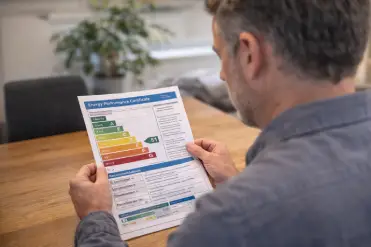
“EPCs are just a box-ticking exercise.” The recommendations report that comes with your certificate is genuinely useful. It tells you in priority order what improvements would make the biggest difference to your rating, with rough cost estimates. Think of it as a free energy audit attached to the legal document.
“A higher rating means the house is warm.” Not exactly. The EPC measures energy efficiency — how much energy is needed to heat the property to a standard temperature — not comfort levels per se. A well-insulated property with an efficient heating system will achieve a high rating, and typically will be cheaper to heat, but the rating doesn’t account for things like draught-proofing quality or how the occupants actually use the heating.
“You can do your own EPC.” Not true. An EPC must be carried out by an accredited Domestic Energy Assessor and lodged formally. There is no legal DIY option.
How to Check If a Property Already Has a Valid EPC
It takes about thirty seconds. Head to the government’s EPC register and enter the property’s postcode. You’ll see all lodged certificates for that address, when they were issued, when they expire, and the rating. If nothing comes up, either the property has never had an EPC, or it pre-dates the register. Either way, a new certificate will be needed before a sale or let can proceed.
EPC Certificates Across the North East — We Can Help
Whether you’re a homeowner in Durham preparing to sell, a landlord in Darlington wanting to check your compliance ahead of the upcoming regulatory changes, or a letting agent in Hartlepool who needs a certificate turned around quickly — the fundamentals of the EPC are the same wherever you are. What differs is local knowledge: the housing stock, the construction types, the age of properties in a given area. That’s something you only build up by actually working in a region.
At EPCIQ, we’re based in Middlesbrough and carry out EPC assessments across the whole of Teesside and the wider North East — including Stockton-on-Tees, Redcar and Cleveland, Hartlepool, Darlington, Durham, and the surrounding areas. If you need an EPC certificate and you’re anywhere within roughly 40 miles of Middlesbrough, we can almost certainly help. Check out our area pages for EPC in Middlesbrough, EPC in Stockton, and EPC in Hartlepool, or get in touch directly if your area isn’t listed — we’re likely to cover it.
Frequently Asked Questions
Can an EPC rating go down as well as up?
Yes, it can. If you’ve removed features that were recorded on a previous certificate — replacing a modern condensing boiler with an older model, for instance, or removing solar panels — your rating could drop. The SAP calculation is based on what’s present at the time of assessment, not what was there before. This catches some people out when they’ve done work they assumed would be neutral.
What happens if I let a property without a valid EPC?
You’re committing a criminal offence under the Energy Performance of Buildings Regulations. Local Trading Standards can issue a penalty charge of up to £5,000 per property. Beyond the fine, you may also find yourself unable to serve a valid Section 21 notice, which has serious implications if you ever need to regain possession of the property.
Can an EPC be challenged if I think it’s wrong?
Yes. If you believe the assessor made a factual error — recorded the wrong construction type, failed to note insulation that’s present, or missed a heating control — you can raise a complaint with the assessor’s accreditation body. If the error is confirmed, the certificate can be amended and re-lodged. This is one of the reasons why it’s worth being present during the inspection and pointing out anything the assessor should be aware of.
Do I need a new EPC if I’ve just had a new boiler fitted?
You’re not legally required to get a new certificate simply because you’ve had a boiler replaced — unless you’re about to sell or let the property. However, a new, more efficient boiler can make a meaningful difference to your rating, and if your current certificate is already a few years old, it may well be worth updating it. Particularly if you’re hoping to access a green mortgage product or a government improvement scheme.
What is checked during an EPC assessment?
The assessor records the property’s construction type and age, wall and roof insulation levels (including loft access), glazing type, the heating system and its controls, hot water provision, and the proportion of low-energy lighting. All of this feeds into the SAP calculation. Nothing is invasive — the assessor is observing and recording, not testing or drilling. See our FAQ page for more detail on how the process works.
Ready to Get Your EPC Sorted?
An EPC certificate is one of those things that’s easy to put off until it becomes urgent. The problem is that urgency — a sale that needs to complete, a tenancy that’s about to start — is exactly when you can’t afford mistakes or delays. Getting it done properly, in advance, with an assessor who takes the time to do the job right, costs very little more than the cheapest option and avoids a lot of potential headaches.
EPCIQ provides fast, accurate EPC certificates across Middlesbrough, Teesside, and the wider North East. Certificates are lodged the same day, pricing is clear upfront, and we’re easy to get hold of if you have questions before or after your assessment.
Take a look at what our clients say on our testimonials page, or find out more about us and how we work.
Get in touch today to book your assessment — we’re usually able to arrange a visit within a day or two.
Ready to Book Your EPC?
EPCIQ covers Middlesbrough, Stockton, Hartlepool, Darlington, Redcar, Durham and the whole of the North East. Get in touch today and we will confirm your appointment within 24 hours.